The IEC 61850 Standard: Why Validating SCL Files is Essential for Substation Automation
The IEC 61850 standard is widely adopted for electrical system automation. It defines data models, communication services, and a configuration language for integrating Intelligent Electronic Devices (IEDs) within substations. At the heart of this standard lies the System Configuration Language (SCL), which plays a crucial role in describing system topology, device communication, and equipment configuration.
In theory, any configuration software should be able to read an SCL file without issues, ensuring interoperability across different vendors. But in practice, things are not so straightforward. Many vendors introduce custom modifications to these files to suit their internal systems—often compromising cross-platform compatibility. Engineers then find themselves spending valuable time identifying inconsistencies, exchanging countless emails with vendor support teams, and deciphering proprietary adaptations. What should be an automated process turns into a lengthy cycle of reviews and fixes, stretching projects that could be completed in weeks into several months of work.
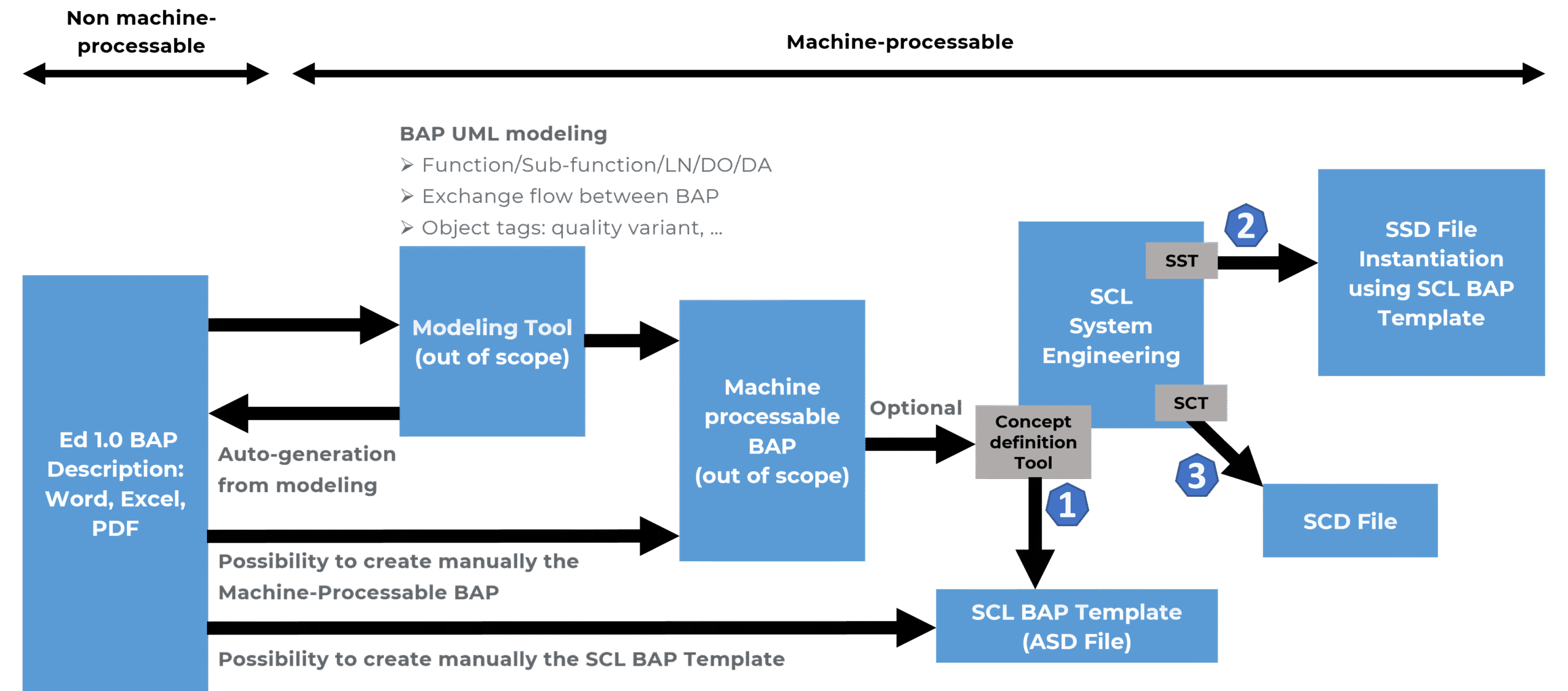
The challenge is amplified by the fact that SCL files, though human-readable, are highly complex. Manually validating thousands of lines of configuration—especially when dealing with slight variations between standard versions or differing vendor interpretations—is nearly impossible. This is particularly true for large-scale projects involving equipment from multiple manufacturers and massive volumes of configuration data (see Figure 1).
To ensure true interoperability and avoid misconfigurations in substation systems, validating SCL files against the IEC 61850 standard is critical. In this article, we’ll explore how SCL files are defined within the standard, the most common issues that arise, and why using independent validation tools is essential to detect errors and ensure full compliance with IEC 61850.

SCL Language According to IEC 61850
In substation automation projects, the engineering phase often starts before the equipment is physically installed. IEDs can perform multiple functions within the system, but their flexibility doesn’t mean all of these functions can operate simultaneously. Therefore, it’s essential to define specific profiles for each IED, selecting only the capabilities required for the particular application.
Although the devices support self-description features, it is critical to have standardized files that define their configurations and functionalities from the early stages of the project. This facilitates proper planning and helps minimize risks such as incompatibilities or operational limitations during commissioning.
To ensure interoperability between tools from different manufacturers, the IEC 61850-6 standard defines the System Configuration Language (SCL), which serves three key purposes:

SCL is a high-level language defined as an XML schema, which can be used to create plain text file formats that describe application-specific structured data. The key advantage of this approach lies in its dual capability: while computers can process it automatically, engineers can also read and understand it when needed.
Because it is based on XML, it inherits several key characteristics: it is hardware- and software-independent, fully extensible, and adaptable to various needs without compromising its fundamental structure. However, this flexibility operates within strict boundaries defined by the official IEC 61850 standard schema.
The IEC distributes this schema as a set of XSD (XML Schema Definition) files that define the structure and content of SCL files, effectively acting as "building rules" for SCL file creation. As shown in Table 1, each XSD has a specific role in the validation process:
Tabla 1. Archivos que componen la definición del esquema XML para SCL.
| File Name | Description |
| SCL_Enums.xsd | The enumerations used in the XML schema. |
| SCL_BaseSimpleTypes.xsd | Basic simple types used by other parts. |
| SCL_BaseTypes.xsd | Definitions of basic complex types used by other parts. |
| SCL_Substation.xsd | Syntax definitions related to processes (Process, Line, Substation). |
| SCL_Communication.xsd | Syntax definitions related to communication. |
| SCL_IED.xsd | Syntax definitions related to IEDs. |
| SCL_DataTypeTemplates.xsd | Syntax definitions related to data type templates. |
| SCL.xsd | Main syntax definition of the SCL schema; defines the root element of every SCL file. |
These XSD files go beyond the basic rules of XML, adding layers of validation specific to the electrical domain:
When an SCL file complies with its corresponding XSD, it ensures that any IEC 61850-compliant system can interpret it correctly, maintaining the interoperability that makes the standard so valuable. Therefore, ensuring that vendor equipment strictly adheres to this schema is the first step in developing IEC 61850 digital engineering projects.
In this case, it’s worth making a few remarks:
Tabla 2. Versiones publicadas de la norma IEC 61850-6.
| Edition | Publication Date | Webstore | Namespace |
| Edition 1.0 | 2004-03 | IEC 61850-6:2004 | IEC 61850-6:2003 |
| Edition 2.0 | 2009-12 | IEC 61850-6:2009 | IEC 61850-6:2007B |
| Revision 1 de Edition 2.0 | 2018-12 | IEC 61850-6:2009/AMD1:2018 | IEC 61850-6:2007B4 |
| Edition 2.1 | 2018 | IEC 61850-6:2009 + AMD1:2018 CSV | IEC 61850-6:2007B4 |
| Revision 2 de Edition 2.0 | 2024 | IEC 61850-6:2009/AMD2:2023 | IEC 61850-6:2007C5 |
| Edition 2.2 | 2024 | IEC 61850-6:2009 + AMD2:2023 CSV | IEC 61850-6:2007C5 |
Recurring Issues in SCL Files and Their Impact on IEC 61850 Projects
So far, we’ve defined what the SCL language is and how its general schema, defined in the XSD files, allows for structural validation. Below, we outline the specific issues that may arise in SCL files during the configuration of IEDs, particularly in multivendor integrations:
desc), units (unit), device names (IEDName), or multicast subscriber declarations are sometimes lost in the process, preventing proper implementation in other software tools.Considering all of the above, we can conclude that the first step in any IEC 61850 digital project is to validate the SCL files that will be part of the system, especially in projects involving IEDs from different manufacturers. This validation is crucial to reveal any potential non-conformities with the IEC 61850 standard that could cause interoperability issues.
Methods for Validating an SCL File
1. Manual Validation
This method involves manually reviewing the structure of the SCL file in XML format, which requires extensive knowledge of the IEC 61850 standard and its data schemas. However, due to the complexity and the number of technical details involved, this approach carries a high risk of error, potentially leading to incorrect configurations or incompatibilities between devices.
2. Use of Automated Validators
To minimize errors and optimize the process, the use of automated validation tools is highly recommended. These tools analyze the conformity of the SCL file with the IEC 61850 standard by validating it against the XSD schemas corresponding to the specific version of the standard being used. Furthermore, the validation tool should be independent of vendor-specific software, which may be biased due to proprietary configurations.
The main benefits of these validators include:
Introduction to the SCL Validator in ATLAN
To ensure the correct implementation of IEC 61850 projects, the ATLAN software includes an automated SCL file validator, designed to detect potential incompatibilities before integrating multi-vendor equipment. This tool ensures strict verification of files against the standard, identifying interoperability risks.
Its main features include: